Category Archives: Birds

Headed South from Jekyll

One week ago we were on Jekyll Island and took the opportunity to visit The Jekyll Island Banding Station – JIBS. This was a great treat, and the folks who volunteer to collect data on birds migrating south were very gracious with their time and information.

White-eyed Vireo - Vireo griseus Jekyll Island, GA - October, 2016

White-eyed Vireo – Vireo griseus – Banding Station on Jekyll Island, GA – October, 2016

We talked with Evan Pitman, a third-generation bander, who is heading the effort this year. He told us that they have been banding birds in this location since 1978 – 38 years.   From 1978 until 2000 it was run by Don and Doris Coors, and then it was picked up by his father.
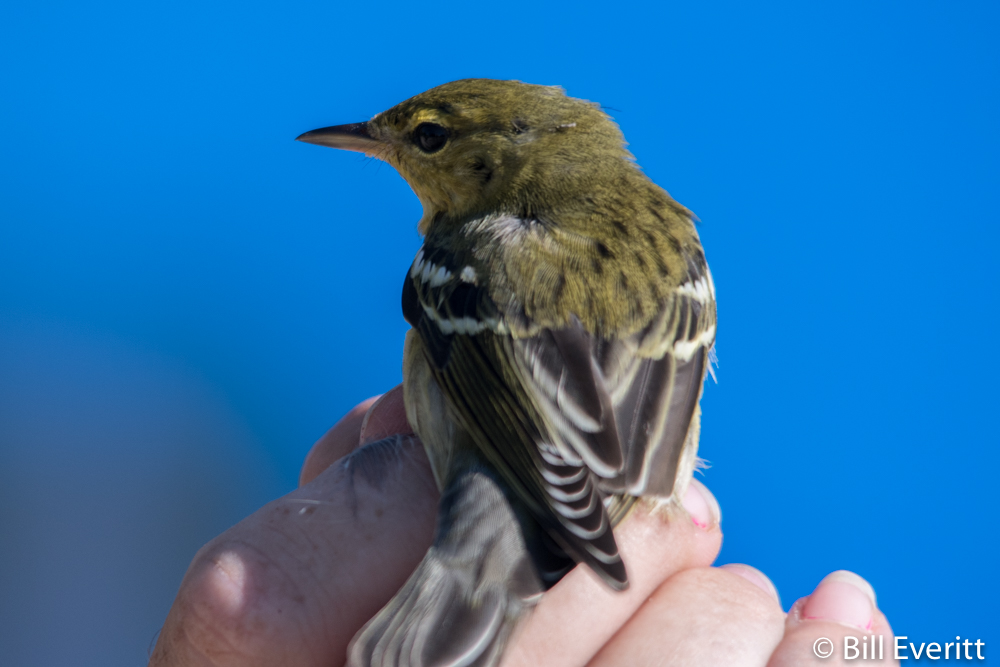
Blackpoll Warbler - Steophaga striata Jekyll Island, GA - October, 2016

Blackpoll Warbler – Steophaga striata

Evan and the JIBS volunteers catch migratory songbirds in mist nets and then place very light-weight identification tags on them.  This enables them to monitor specific species, track individual birds, and collect health information as birds gain mass and fat for migration further south. Some birds are coming to stay, and some birds are just passing through.

Evan told us that in previous years with more people and nets (as many as 27), they banded 2,700 birds one season.  This year they have 17 nets and expect to band about 1,500 birds.  They’re trying to expand the season from 3 weeks to 4 weeks in order to collect more data.

This location is in the critical path for many of our migrants so JIBS is able to monitor the long-term health of specific species as well as overall numbers.  Audubon lists Jekyll Island as an Important Bird Area and says that since 1978, over 40,000 birds have been banded.

We’re lucky to have many of these same birds pass through our area, including Summer Tanagers, vireos, grosbeaks, and many species of warbler.

References and Additional Information

[1]  Coastal Birding Georgia blog: Banding on Jekyll Island
[2]  Audubon:  Important Bird Areas – Jekyll Island Georgia
Heading South

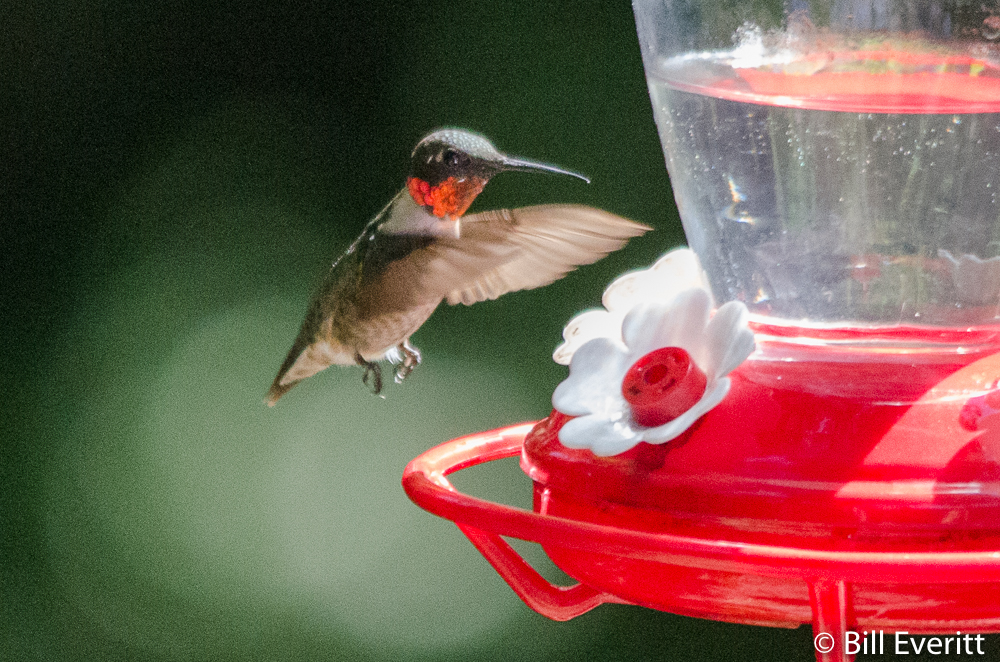
Ruby-throated Hummingbird

juvenile male Ruby-throated Hummingbird at a feeder in Peachtree Park on September 21, 2016

Do the hummers that you are seeing now seem to be a bit more skittish than the ones that you’ve been seeing all summer?  Maybe it’s because the migrants are here, and they aren’t as familiar with their surroundings as the locals.  [1]

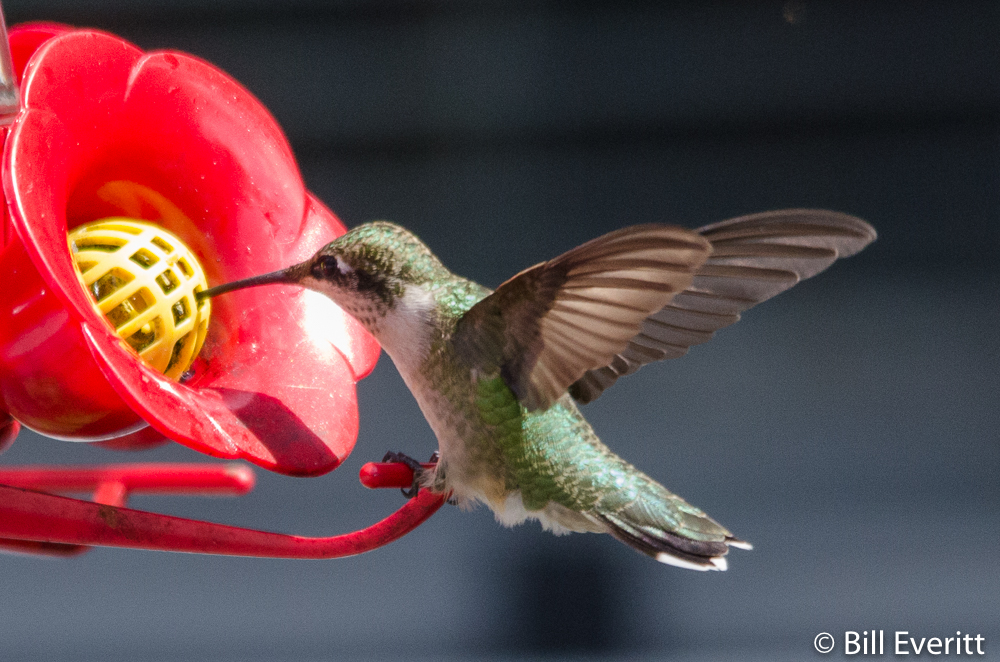
Ruby-throated Hummingbird

adult male Ruby-throat 9/21/16

Hummingbirds overwinter in Central and South America. [2]  Ruby-throated Hummingbirds return to most parts of Georgia in March (in Atlanta, around March 15 – April 1) [2] and usually stay with us until the first week in October. [10]  So it’s a great time to enjoy the last days of the locals before they head south, as well migrants passing through from points north.

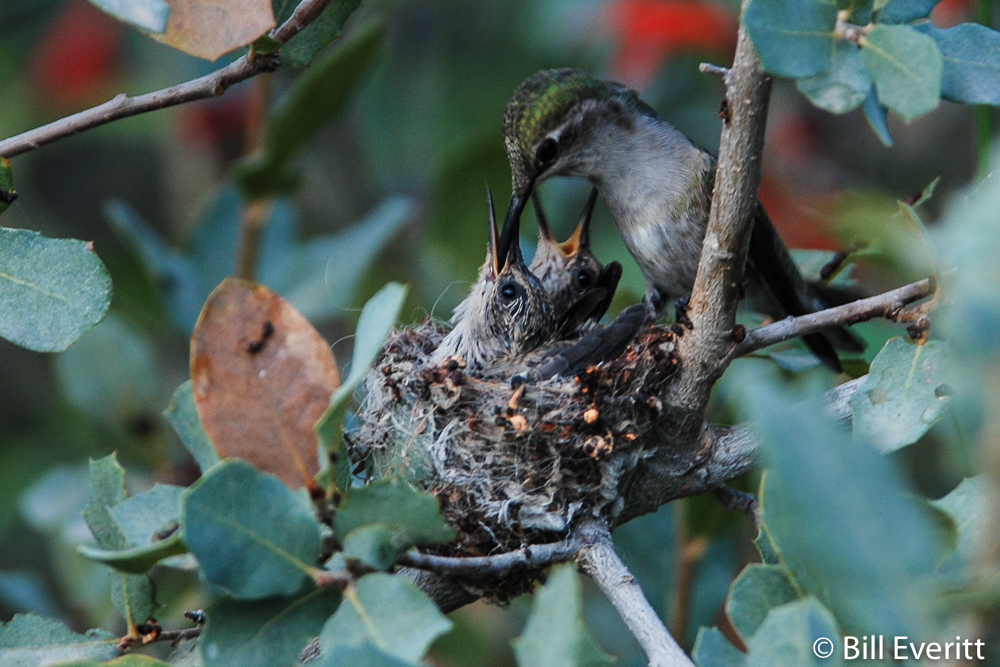
Black-chinned Hummingbird - Archilochus alexandri Lady Bird Johnson Wildflower Center, Austin TX - April 7, 2015

Black-chinned Hummingbird – Archilochus alexandri
Lady Bird Johnson Wildflower Center, Austin TX

The Ruby-throated Hummingbird is the only species of hummingbird known to nest to Georgia. [4]  In fact, it is the only hummingbird known to breed east of the Mississippi River. [11]  Our female Ruby- throated hummers produce up to two broods per year.  Nests are typically built on a small branch, sometimes rebuilding the nest from the previous year. [4]

However, Ruby-throats are not the only hummingbirds in Georgia.  There are 10 others that spend time here in the summer: Black-chinned, Rufous, Calliope, Magnificent, Allen’s, Anna’s, Broad-billed, Green Violet-ear, Green-breasted Mango and Broad-tailed hummingbird. [4]

Anna's Hummingbird - Calypte anna Desert Museum, Tuscon, AZ - March 2010

Anna’s Hummingbird – Calypte anna
Desert Museum, Tuscon, AZ

Some hummingbirds do overwinter in Georgia [6] and there are periodic sightings in Atlanta. So, it’s a good idea to keep one feeder up in the winter.  Even better, make sure you have pollinator-friendly plants blooming year-round. Witch Hazel, Lenten Roses, and winter bulbs such as Crocus are some examples.

Despite what you may have heard, you cannot keep hummingbirds from migrating by leaving feeders up during the fall and winter seasons.  Hummingbirds migrate in response to a decline in day length, not food availability. [5]

We’ve included some links below with additional information on migration, feeding, and overwintering.  The first link from Lerner.org will direct you to a dynamic hummingbird migration map and the second link from the University of Georgia has good information on feeding.  Also, If you haven’t visited the State Botanical Garden of Georgia’s Hummingbird Trail, you should consider a drive over to Athens.

Hummmmm.  Zoom!  Zip!    We’re outta here.

References and Additional Information

[1]  Learner.org – Journey North: Hummingbird: Pushing Southward
[2]  UGA: Make Your Backyard a Favorite for Hummingbirds
[3]  GA Department of Agriculture: – Plant a Garden for Hummingbirds
[4]  Georgia DNR: Hummingbirds in Your Backyard – Interesting Facts
[5]  Georgia DNR: Hummingbirds in Your Backyard – Feeding Hummingbirds
[6]  Georgia DNR: Out My Backdoor – Creating Hummingbird Havens
[7]  UGA: Creating Native Plant Hummingbird Habitat in Georgia
[9]  Georgia DNR: Georgia’s Wintering Hummingbirds
[9]  UGA: Extension: Attracting Birds to Your Backyard
[10]  The State Botanical garden of Georgia: Hummingbird Trail
[11]  The Breeding Bird Atlas of Georgia – UGA Press: Schneider, Beaton, Keyes and Klaus, Eds.