Author Archives: beveritt

Cooper’s Hawk Triplets

Cooper's Hawk - Accipiter cooperii
Peachtree Park, Atlanta, GA - June, 2016

Cooper’s Hawk with a food delivery

Our neighbors across the street sent us a message last night that they were watching three juvenile Cooper’s Hawks playing on a limb 90 feet above their house in a tall pine.  90 feet is so high it hurts your neck to look up.

Our ornithologist friend who lives next door to the nesting hawks said he has seen a lot of them lately in his back yard. He’s had a great time watching them in his trees and bird bath.
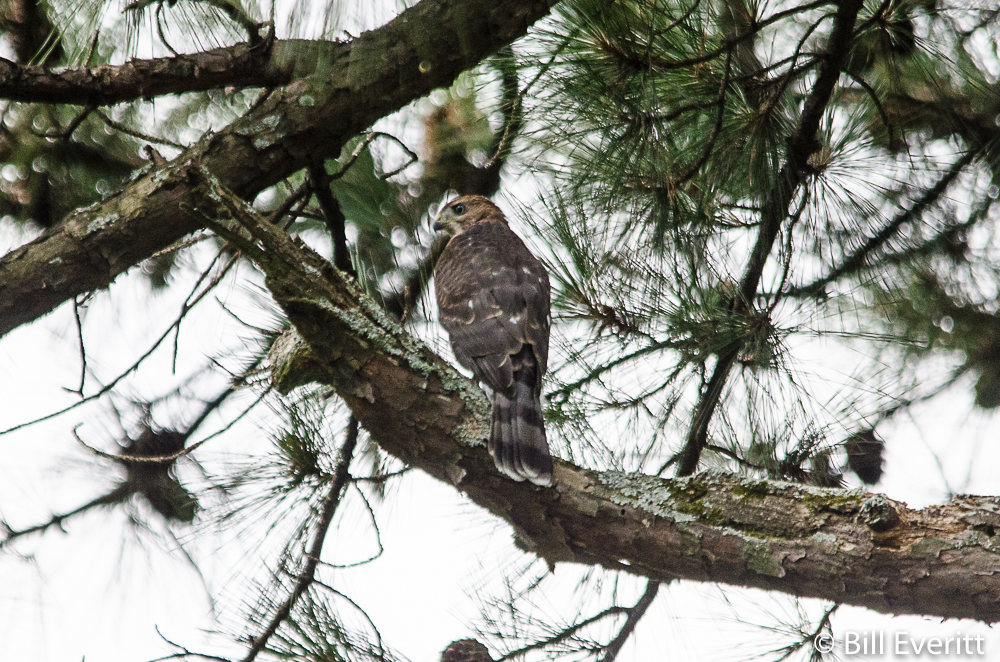
Cooper's Hawk - Accipiter cooperii
Peachtree Park, Atlanta, GA - June, 2016

1 of 3 juvenile Cooper’s Hawks

His observation is that the three juveniles have just fledged and are getting their sea legs.  They’ll stay close by for a while and may even rendezvous at the nest for a few days.  The parents will most likely supplement their food supply a bit longer.  Today they were all in the trees calling to each other back and forth.  We were unable to get a picture of the three together, but will keep a close eye out and post an update if we do.

Fifty years ago Cooper’s Hawks were in real trouble–their numbers were low and declining. But they have adapted to urban living and now seem to be doing very well.  We see them all the time in our neighborhood.

Pine 7

Cooper’s Hawk nest 90 feet up

This emphasizes the importance of pines.  Some people prefer hardwoods, but pines are also a critical part of our area’s  ecology and are a significant resource for nesters, including these Cooper’s Hawks, Barred Owls, and all sorts of wildlife.

The neighbors with the hawks planted a Longleaf Pine when they moved here several years ago.  It’s quite tall and stately now, and will be magnificent some day.  Consider planting one in your yard.
Surprise Hiker

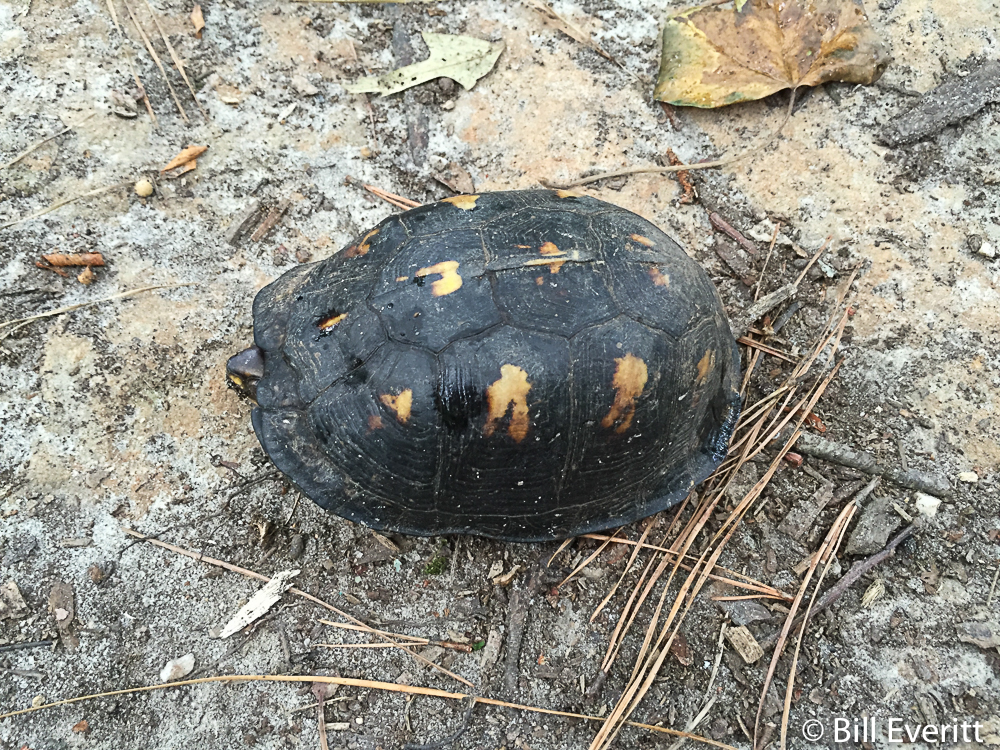
Turtle on the Nature Trail

Eastern Box Turtle on the Nature Trail

You never know who you’re going to run into on the Peachtree Park Nature Trail.  A couple of days ago we came across this little female Eastern Box Turtle crossing from one side of the trail to the other.  Why do we think it’s a female?  Because before she ducked into her shell we got a quick look at her eyes and they were not red.  Males have red eyes.

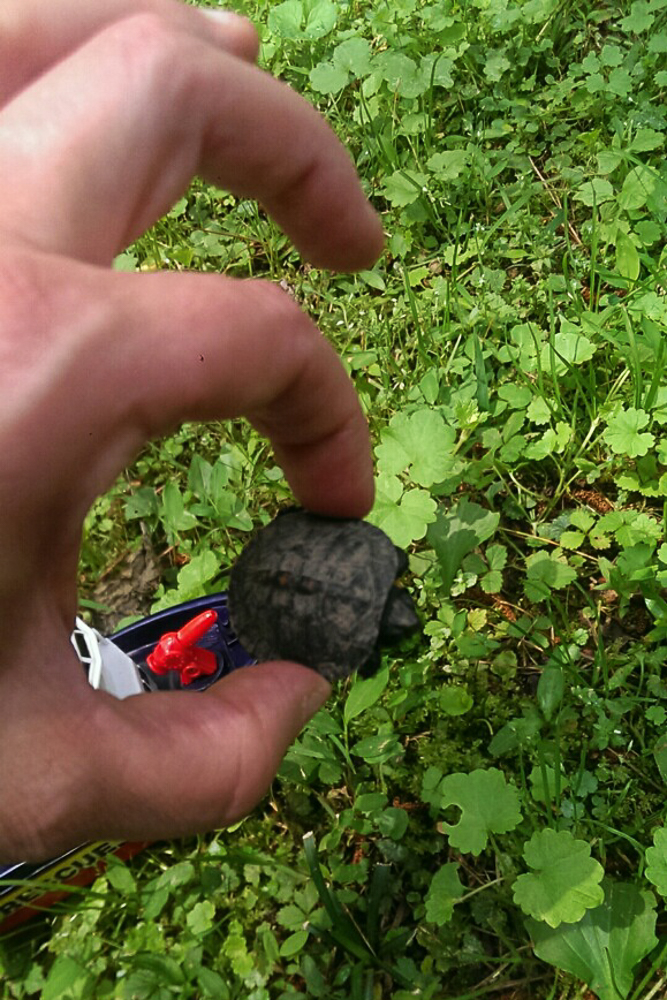
About a year ago, our neighbor across the street sent us a photo of a baby turtle that he found in his back yard.  Who knows, it could be this same turtle.

Payton's Baby Turtle

Baby Eastern Box Turtle

Turns out that now is a good time to spot box turtles since it’s nesting season. Females nest from May through July laying 1 to 2 clutches of 5 eggs each.  Most hatchlings emerge from the nest in the fall.  Hatchlings are very secretive and are seldom seen until they are 2 or 3 years old. [1]

Habitat loss is their biggest threat.  They are long-lived with established home ranges and favorite habitat patches that they may visit each year at the same time. [1]

When roads fragment the box turtle’s habitat, entire populations can get wiped out.  We know this is true because we have a male box turtle that frequently crosses Darlington Road.  (see our post Slow, Turtles)

Look for these little guys when you walk or drive.  If you find one in the street or on a trail where they might get hit, move them to a safe spot in the direction they were moving.

[1]  Turtles of the Southeast – Kurt Buhlmann, Tacey Tuberville, and Whit Gibbons