Tag Archives: Ruby-throated Hummingbird

Even More Hummer Activity Now

Ruby-throated Hummingbird

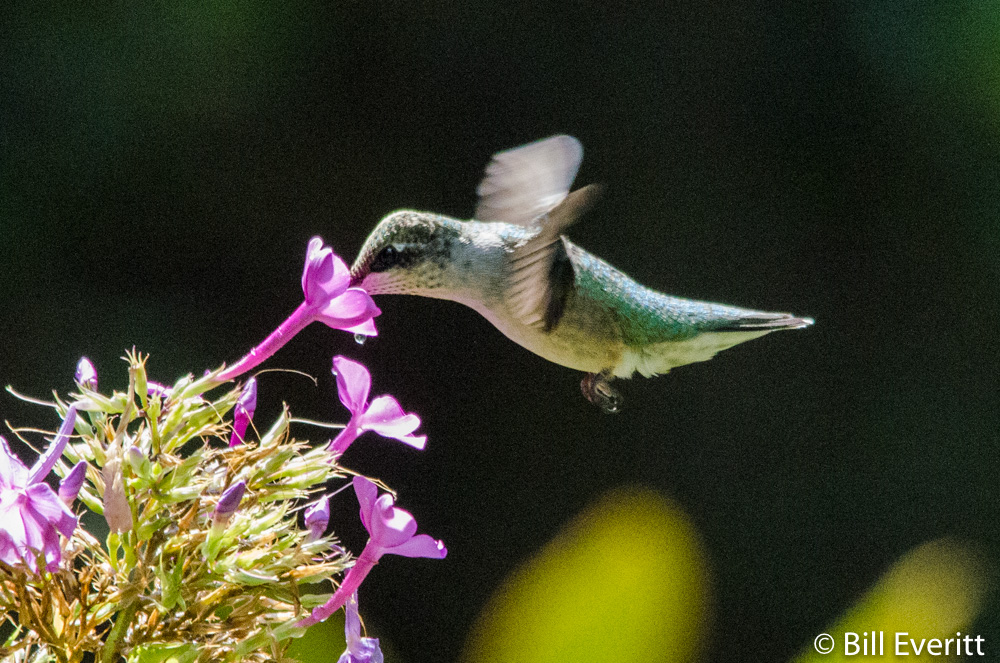
Ruby-throated Hummingbird on Phlox

In our April 23 blog we talked about the first of the season hummingbirds.  Then it seemed as if hummingbird activity dwindled with not many sightings until about a week or so ago. We wondered why.

Fortunately someone posed exactly this question about the drop in hummingbird activity in June followed be a late July spike on GABO, the forum for Georgia Birders Online.  The answers were great and helped us understand.  We thought you might like to know too.

Ruby-throated Hummingbird

Ruby-throated Hummingbird perched on fig limb

During the early spring the Ruby-throated Hummingbirds return from their southern overwintering locations.  They come in pairs, both males and females.  But beginning in June, you don’t see many females – they are nesting.  Another reason that you are less likely to see females at feeders and flowers, as suggested by one of the GABO contributors, is because the females are in search of protein to feed their young.  The hummer perched on the fig limb has her tongue out and we speculate that it maybe to round up ants.

Then, at the end of June and into July the relative dearth of hummers is replaced with an abundance as the newly fledged birds begin joining their parents in search of food.

Who’s That Humming?

Native Columbine

Canadian Columbine

Local wisdom says when the Canadian Columbine (a native) booms the hummers are here.  It’s certainly true this year.  We have already been buzzed by a few, but no visuals yet.    Atlanta Audubon’s check list for Atlanta lists four Hummingbirds: Ruby-throated, Rufous, Black-chinned and Calliope.  Only the Ruby-throated is common here and only in the Spring, Summer and Fall; the rest are rare.  Enjoy them while they’re here, because in the fall they’ll be headed back on the long flight across the Gulf of Mexico  to Central America.

Ruby-throated Hummingbird

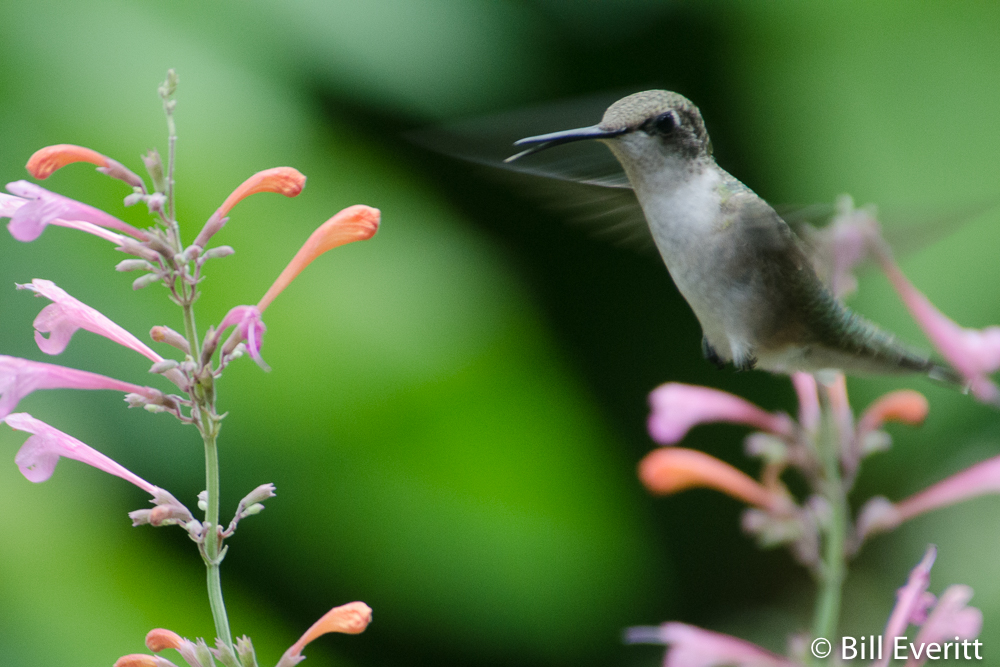
Ruby-throated Hummingbird feeding on Agastache

Right now they are building nests and gathering fuel to recharge after their long flight.  Nectar from flowers and flowering trees, as well as small insects and spiders are the main food source.  Young birds are fed insects for protein since nectar is an insufficient source of protein for the growing birds.

They prefer flowers that are red or orange.  This is where, with a little planning,  you can have something blooming that will provide them with food throughout their stay.

If you decide to feed them with a sugar solution, do not color the water since the dyes are bad for the hummers.  Feeders should be checked frequently in warm weather, and daily if it’s really hot since the sugar water will ferment and make them sick.

We received this from Audubon two days ago: “Download Audubon’s Hummingbirds at Home app and join a network of citizen scientists working to help hummingbirds now and ensure them a bright future.”  There’s a link at the top of the page to download the app.