Category Archives: Habitat

Brown is Beautiful

Especially if you are foraging for food, Like the Song Sparrow below in the native grass.

We plant for color and to attract pollinators in the spring, summer and fall.  But when winter comes and the garden turns brown, leaving plants with seed heads will provide much needed food for all manner of wildlife – especially birds.

Like this row of river oats beside the path.

Goldenrod’s spectacular fall display leaves much in the way of food.

Seeds in the heart of spent Coneflowers and Black-eyed Susans are a bonus.

Even plants in pots on the deck can provide good foraging material.

Frogs in the City – 2 New Studies

Frog on the Edge

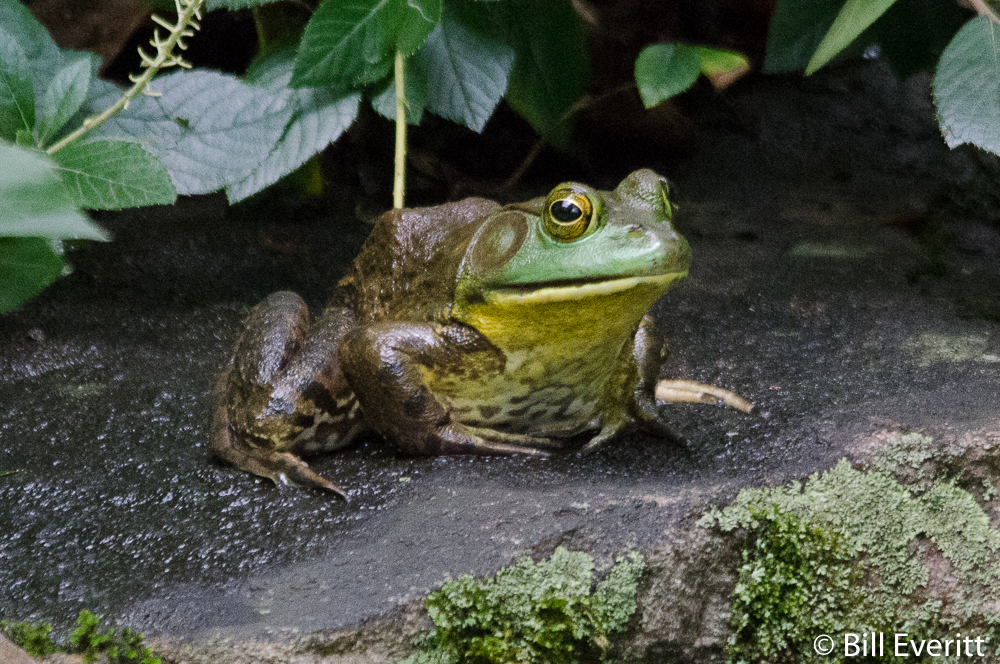
American Bullfrog

They’re here alright.  You can hear them calling during the day and at night.  Bullfrogs, Leopard and Green frogs. And in among the cicada’s, the wonderful nighttime sound of tree frogs.  Our neighborhood has them all.  It’s no surprise that they depend on safe clean water year round for survival and breeding.  Our neighborhood has that too in creeks and small backyard ponds.

Gray Treefrog

Gray Treefrog – most likely Cope’s Gray

Science Daily is a clipping service that pulls together interesting science news stories from the world’s leading universities and research organizations.  There have been two recently about urban frogs that caught our eye.

The first, If you build it they will come: Frogs flourish in humanmade ponds comes from the University of Florida.  The article is not so much about backyard ponds as storm water ponds in cities.  Good information in a concise form that might help inform our thinking on intown development that affects wildlife.

The second article however does talk about our yards and the issue of safe clean water. Estrogen, shrubbery, and the sex ratio of suburban frogs. To quote the article “A new Yale study shows that estrogen in suburban yards is changing the ratio of male and female green frogs at nearby ponds. Higher levels of estrogen in areas where there are shrubs, vegetable gardens, and manicured lawns are disrupting frogs’ endocrine systems, according to the study.” This information is stunning.

Happily, as gardeners we can do our part to help out the frogs (and other critters, including ourselves) by eliminating chemicals and lawn services that apply chemicals.  Those little signs that warn you to keep babies, pets and wildlife away can’t be read by babies, pets or wildlife.