
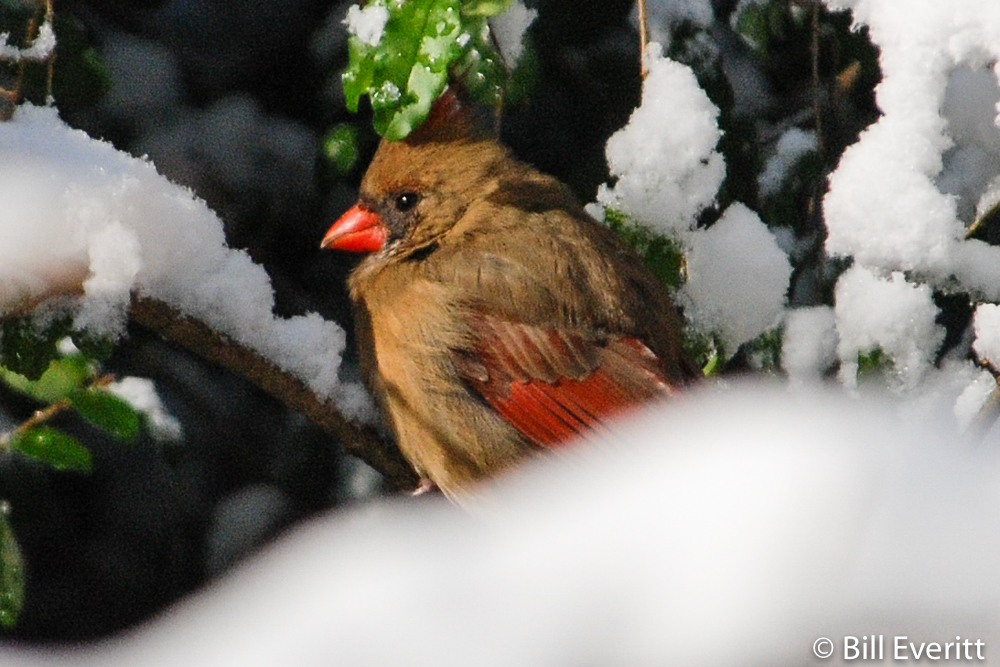
Female Northern Cardinal in the snow
All of a sudden it’s about to be cold here in Atlanta. Later this week the nighttime temperatures will be in the twenties. So while you’re all warm and toasty in front of the fire, remember there are little guys outside trying to survive the cold.
You might think it’s no big deal; wildlife has been living outside in the cold for millions of years. But consider the fact that urban wildlife faces a little tougher challenge with a reduced supply of food, water and shelter and the added disturbances of humans.
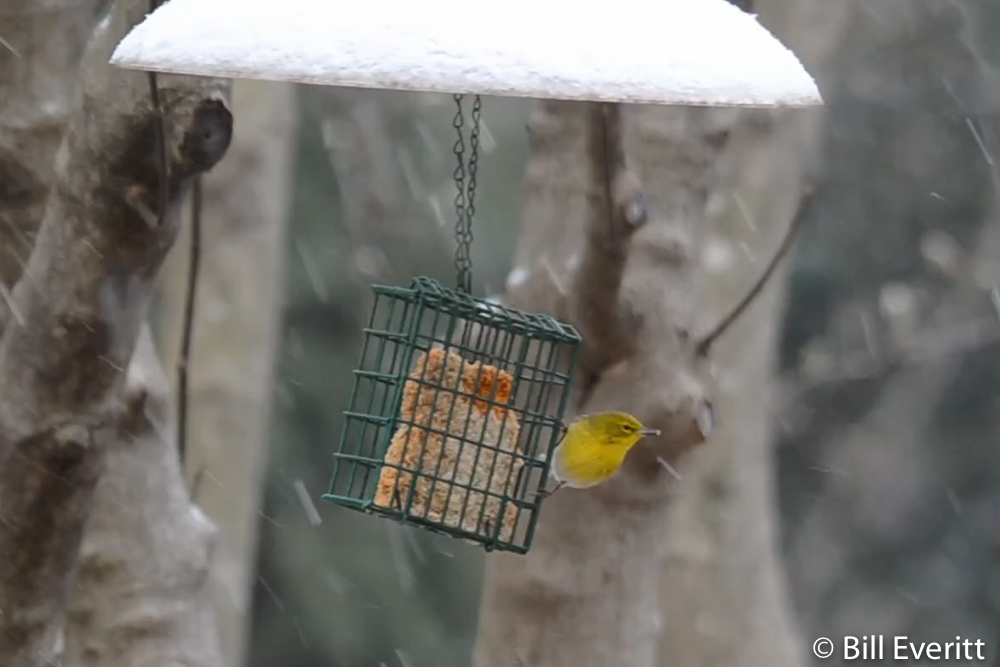
Pine Warbler on Suet Feeder
Food – Keep bird feeders stocked and if snow or sleet covers the ground, toss a little extra on the ground. And remember to keep your bird feeders clean and free of mold. Suet feeders are especially popular in cold weather.
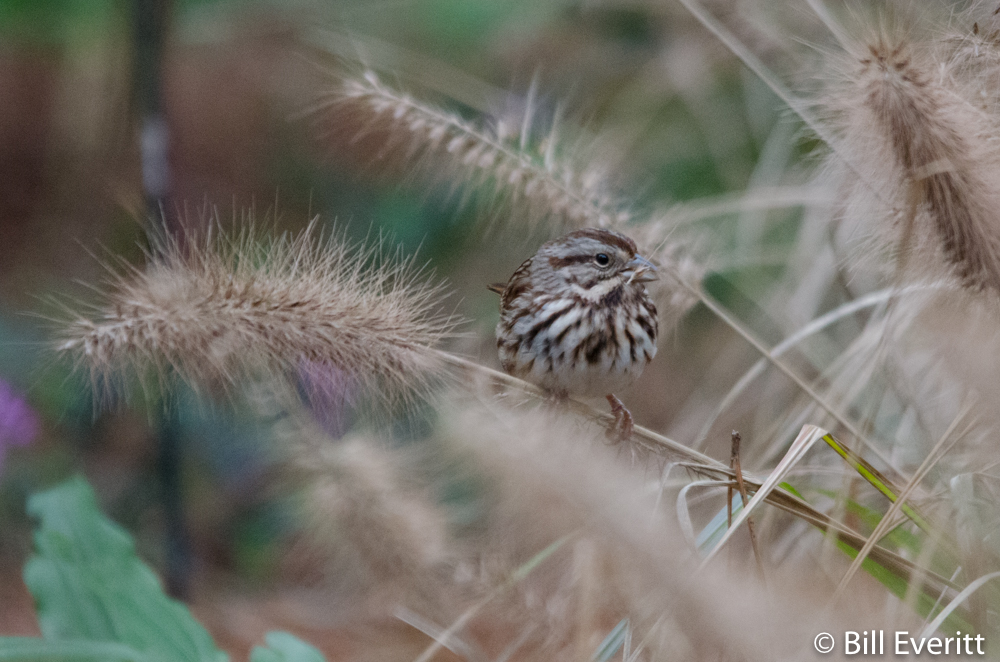
Song Sparrow eating native grass seed
Also, a great source of free food is seed heads from summer and fall perennials–leave some standing and enjoy watching the appreciative birds. (see our blog out Brown is Beautiful for more)

River Oats left for seed
Other wildlife will benefit from dried nuts, or fruit such as cranberries. Roasted peanuts are good, but do not toss out uncooked peanuts. Peanuts are legumes not nuts, and raw peanuts consumed in quantity can be fatal to squirrels or chipmunks. [2]
Water – Make sure a couple of birds baths are always available and not frozen (see our blog Surviving Cold Weather). Both birds and other critters will thank you.
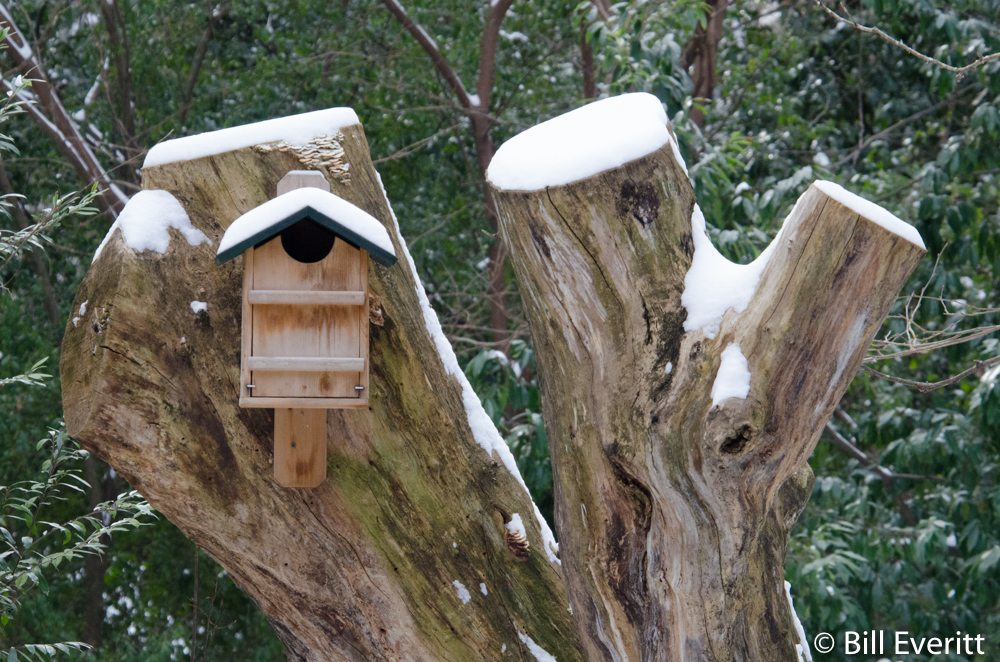
Screech-Owl Box can be shelter
Shelter – “‘Come in,’ she said, ‘I’ll give you shelter from the storm’.” – Bob Dylan. OK, sorry – drifted off for a minute.
There are many forms of shelter that help wildlife. Birdhouses can provide protection from the wind and biting cold. One year we had a Downy Woodpecker roost each night in a bluebird house in the front yard.
Leaf piles, logs, rocks and ground cover help all manner of small critters and insects. Native bees will nest in the stems of perennial plants, which is another reason to leave them in place until the spring. Even the shrubbery next to your house can provide critical shelter on very cold nights.
Don’t disturb – especially after dark. This paragraph from What The Robin Knows by Jon Young tells why:
 “…conservation of energy is a major priority for all animals, but especially for birds, almost all of whom run on a very lean energy budget. (A chickadee startled from its roost on a very cold night in the dead of winter loses the vital heat trapped in its feathers. This bird may well die before dawn.)”
Try to avoid walking next to shrubbery where you think someone might be sheltered after dark.
Now, go enjoy your hot mulled cider.
References and Additional Information
[1] Humane Society of the United States: Fall into Winter: Help Backyard Wildlife Prepare for Cold Weather
[2] Northwest Seed and Pet: Danger of Feeding Raw Peanuts to Squirrels
[3] U.S. Fish and Wildlife Service: Bird Feeding
[4] What the Robin Knows – Jon Young


 the Intown Hawk