Category Archives: Birds

Who Cooks for You?

Barred Owl - Strix varia Okefenokee National Wildlife Refuge - November, 2006

Barred Owl – Strix varia
photo taken in the Okefenokee National Wildlife Refuge in 2006

That’s the way we remember one of the calls of the Barred Owl – who_who who_whoooo (who cooks for you).

We’ve been hearing them in our yard and the yards adjoining this spring and summer.  Occasionally we’ll be lucky enough to catch a glimpse of two or three moving around in the pines at dusk.  At least two neighbors have reported that they have them nesting in their back yards.  One says they have been in residence for at least eight years.

Two nights ago at 2:00 a.m. we were awakened to a sound like the caterwauling of a howler monkey.  There were at least two talking back and forth.   Based on Cornell’s All About Birds site, we think this is a mated pair.

I went outside to get a recording and they were moving all around sometimes sounding only 15 or 20 feet away.  But since they are masters at stealth mode, I could neither see them nor hear them fly.  This went on for almost an hour.

Even though we rarely see these birds, we love hearing them at night.  And being such good nighttime hunters they help keep the rodent population in check.  We also have the Great Horned Owl and Eastern Screech-Owl here.  We’ll talk about them in a future post.
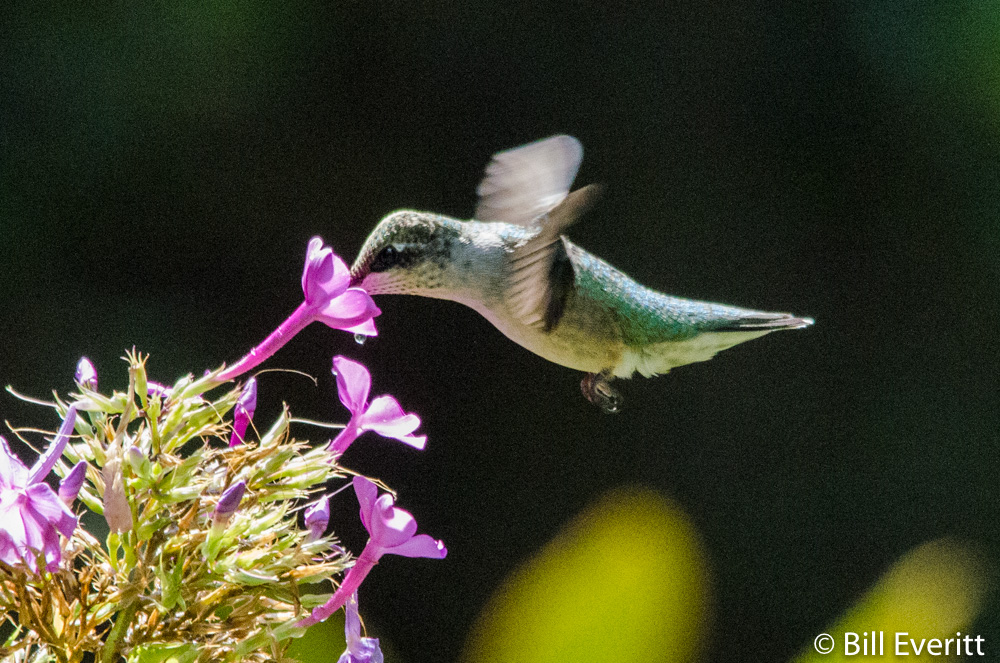
Even More Hummer Activity Now

Ruby-throated Hummingbird

Ruby-throated Hummingbird on Phlox

In our April 23 blog we talked about the first of the season hummingbirds.  Then it seemed as if hummingbird activity dwindled with not many sightings until about a week or so ago. We wondered why.

Fortunately someone posed exactly this question about the drop in hummingbird activity in June followed be a late July spike on GABO, the forum for Georgia Birders Online.  The answers were great and helped us understand.  We thought you might like to know too.

Ruby-throated Hummingbird

Ruby-throated Hummingbird perched on fig limb

During the early spring the Ruby-throated Hummingbirds return from their southern overwintering locations.  They come in pairs, both males and females.  But beginning in June, you don’t see many females – they are nesting.  Another reason that you are less likely to see females at feeders and flowers, as suggested by one of the GABO contributors, is because the females are in search of protein to feed their young.  The hummer perched on the fig limb has her tongue out and we speculate that it maybe to round up ants.

Then, at the end of June and into July the relative dearth of hummers is replaced with an abundance as the newly fledged birds begin joining their parents in search of food.