
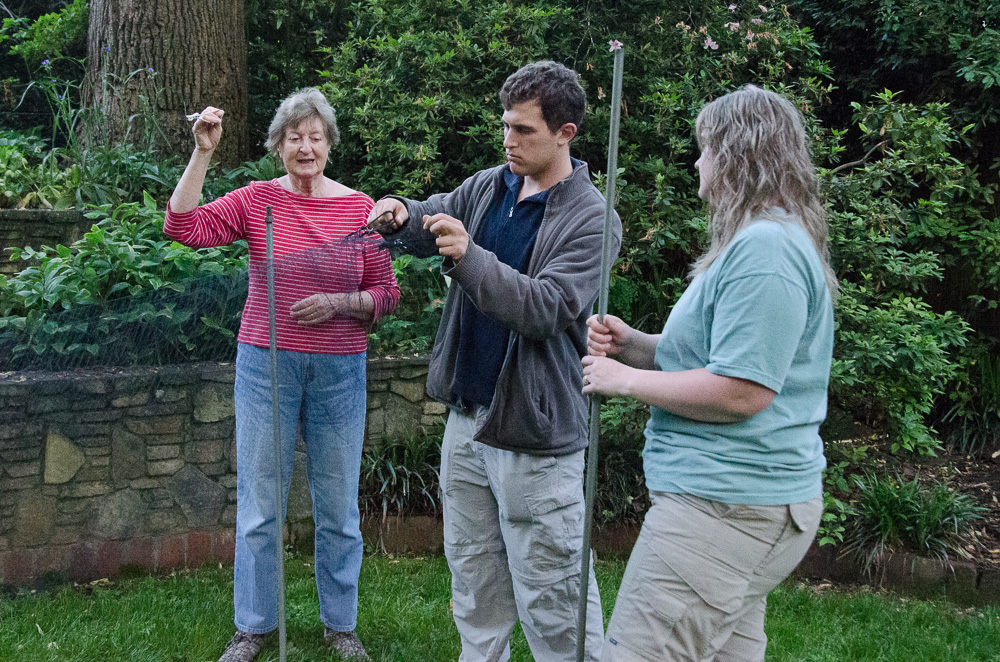
 For the second year, Stella and Jack Wissner have hosted representatives from the Smithsonian’s Migratory Bird Center and Neighborhood Nestwatch Program. Stella is a master birder and an active member of Atlanta Audubon.
This past Sunday Adam Eichenwald and Julie Downs, Smithsonian representatives, arrived at 6:30 AM. Adam has a Bachelor’s degree in Biology and Environmental Science from Bowdoin in Maine, and Julie is an Auburn graduate with a Bachelor’s in Wildlife Ecology and Management.
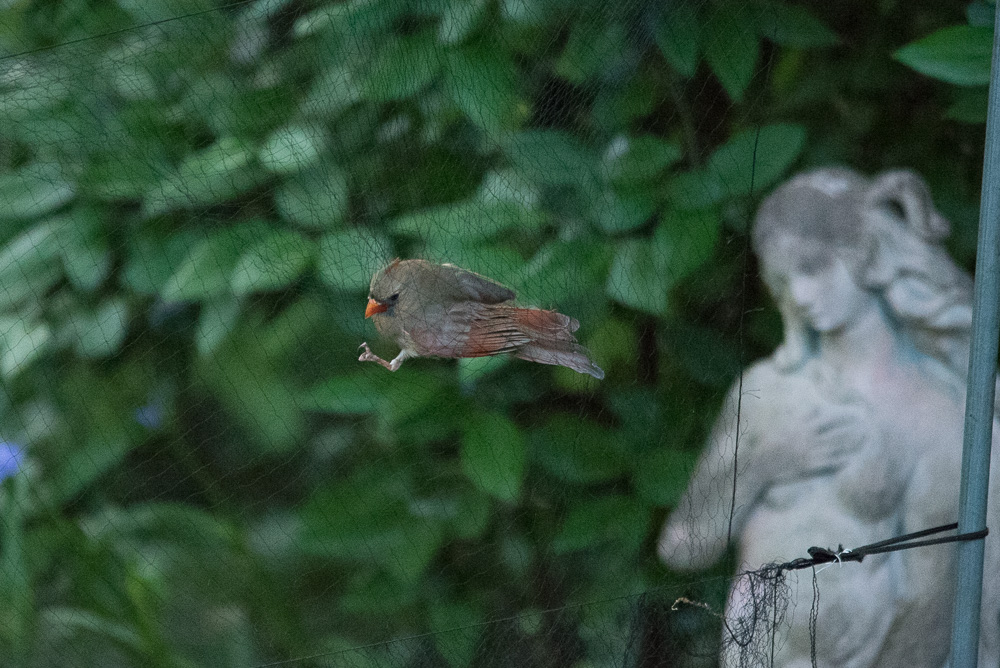 They went straight to work and set up two nets in Stella and Jack’s back yard. The nets are a few feet off the ground, about 20 feet long and 6 feet high, and are made of very fine black webbing which makes them practically invisible. Then everybody waits until a bird flies into the net.
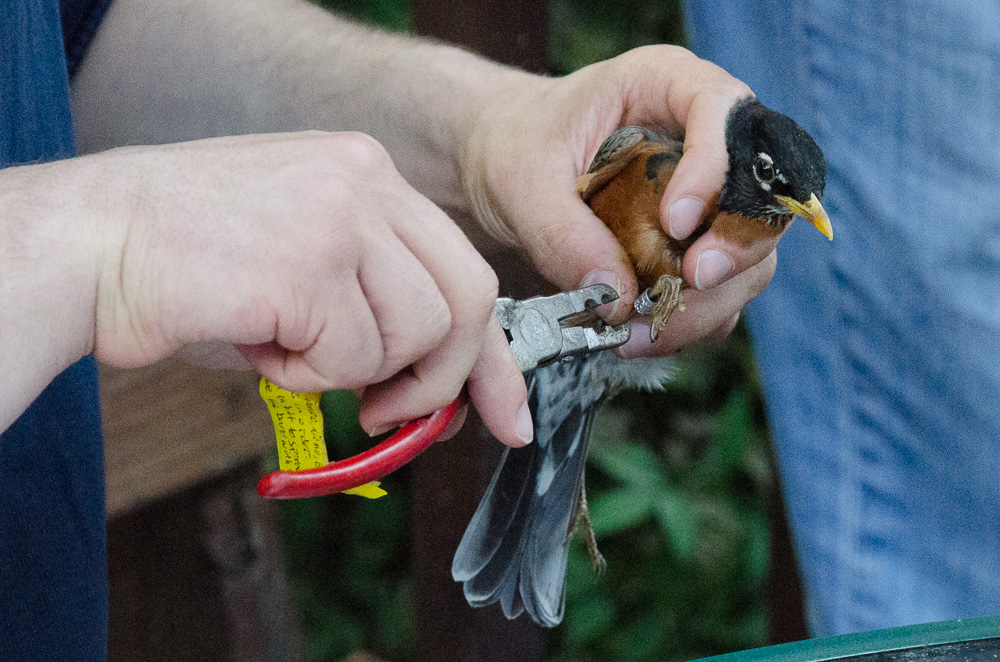 Very carefully a captured bird is extracted, measured, weighed, banded and released. The results are recorded and entered into the Smithsonian’s Migratory Bird Program database and a copy is given to Stella and Jack. Then all year, as they watch birds come to their feeders, they can tell if it’s one that they helped identify. They forward information on their sightings back to the Smithsonian.

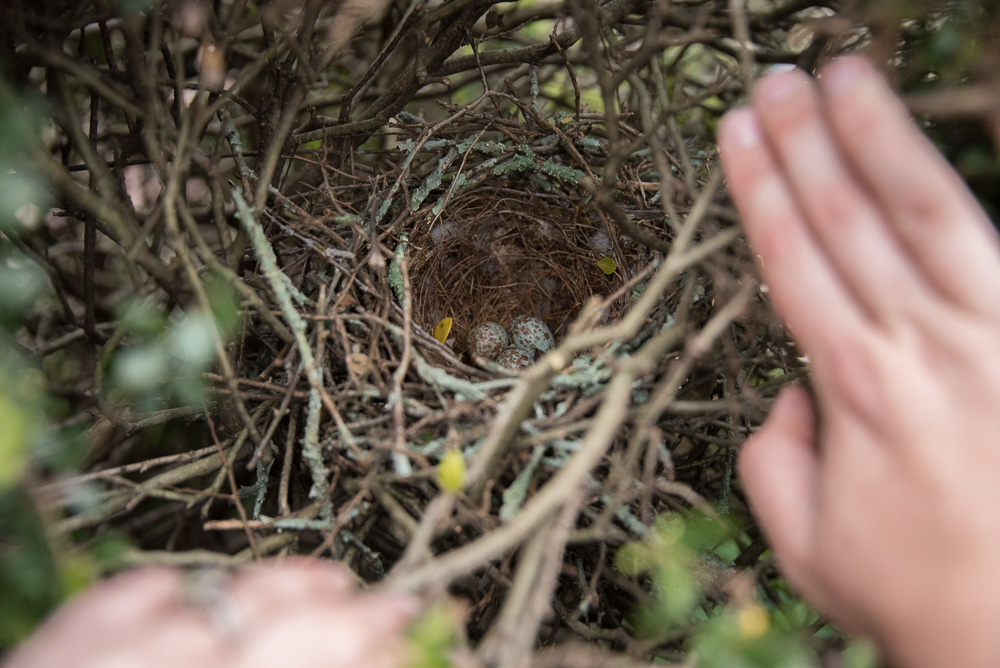
As if that weren’t enough, two active nests were discovered in the shrubbery. One in the back yard had two Eastern Towhee chicks, and a second in a shrub in their neighbor’s yard had three Northern Mockingbird eggs. 
Being in the Wissner’s back yard is like being in a hardwood forest, full of bird song and activity. Sunday morning the weather was perfect, and 5 birds were banded. Great morning! Thanks Stella, Jack, Adam and Julie for the opportunity to observe this remarkable activity.


 the Intown Hawk