

Dutchman’s Pipe – Aristolochia tomentosa
This is Pipevine. Specifically, Dutchman’s Pipe, Aristolochia tomentosa. It’s been planted close to our deck and by this time of year has successfully made its way into any nearby support structure it can find, such as our holly. Looks like Kudzu in the picture.
Why would you you want one of these plants? Because Pipevine is the only host plant for the beautiful Pipevine Swallowtail butterfly. Females lay clusters of one to twenty reddish-brown eggs on the underside of this plant. In Georgia, there may be as many as three broods each season.
As the eggs hatch, the caterpillars will eat the Pipevine leaves and stems. That’s right, we planted this vine hoping it would be eaten. The progression looks like this:

-
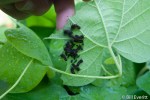
- Pipevine Swallowtail Larva
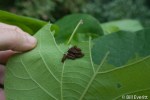
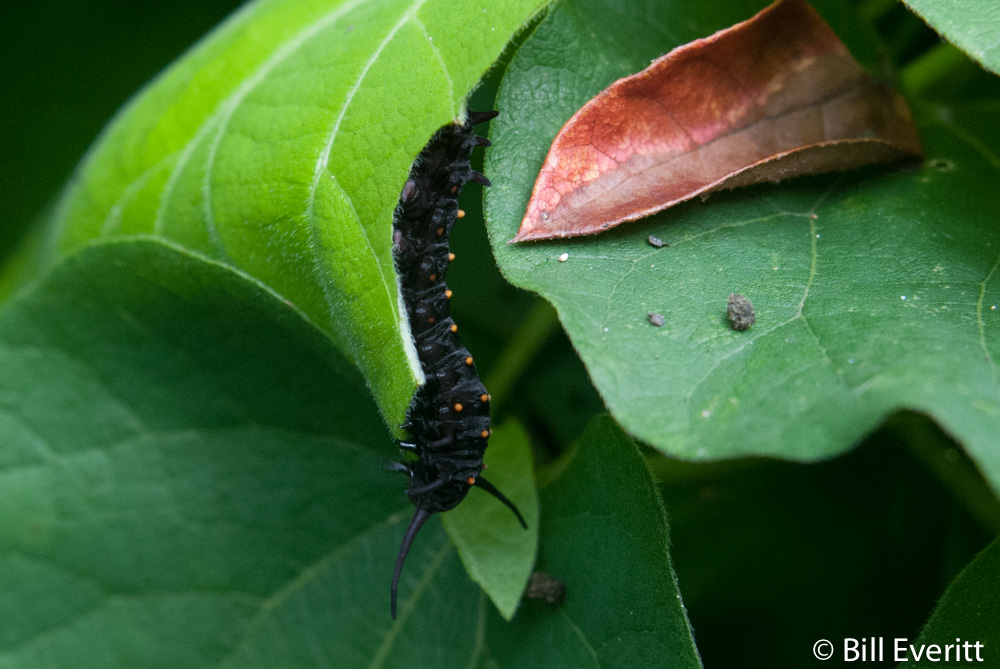
Pipevine caterpillars and butterflies are toxic because they retain poison from their host plant. Take a close look at the caterpillar below with his bright orange spots. Those spots are a clear warning sign to birds.
These magnificent butterflies are the result:
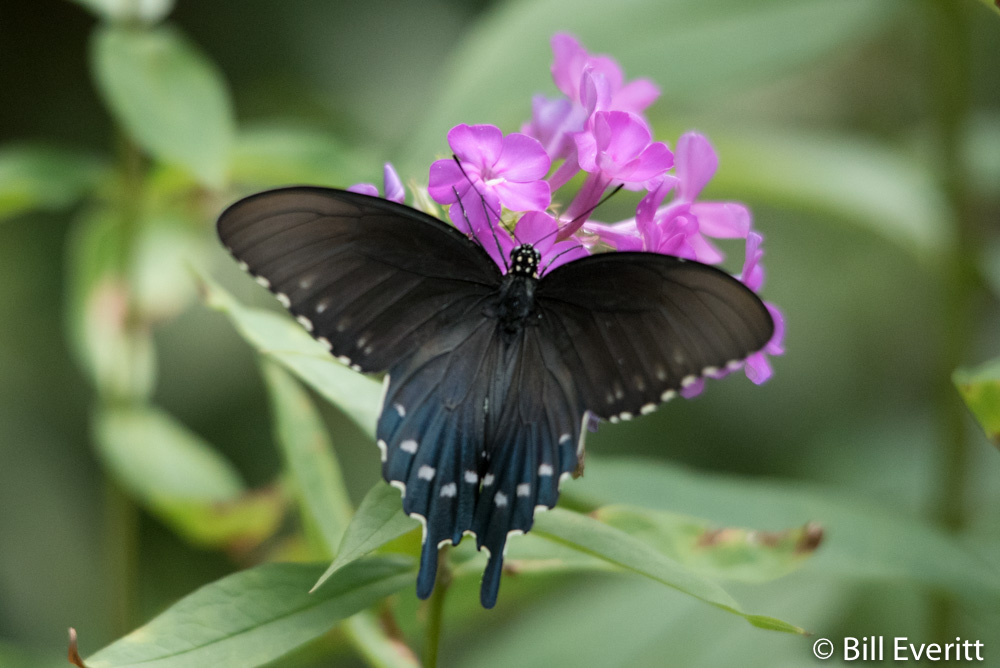
Pipevine Swallowtail butterfly feeding on native phlox – their favorite nectar plant in our garden
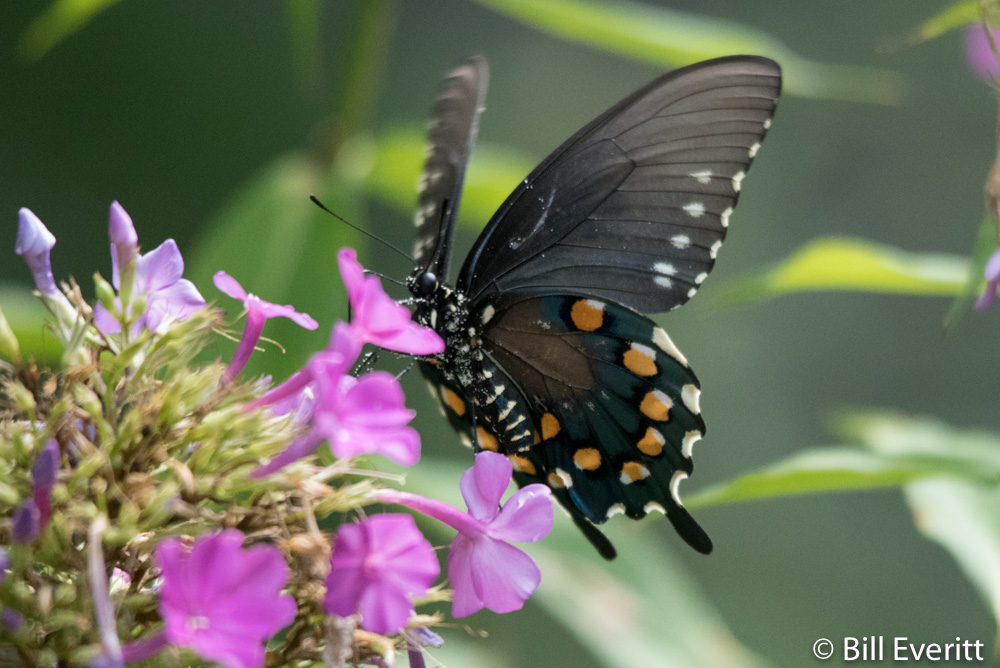
The upper surface of the hind wings are gorgeous iridescent blue or blue-green with pale markings. Males have brighter and larger metallic regions than females. The underside of the hind wing has seven orange spots surrounded by iridescent blue. Pipevine Swallowtails can have a wingspan to up to five inches and we love having these beautiful creatures in our garden.

 the Intown Hawk