Monthly Archives: April 2016

Nesters on the Nature Trail

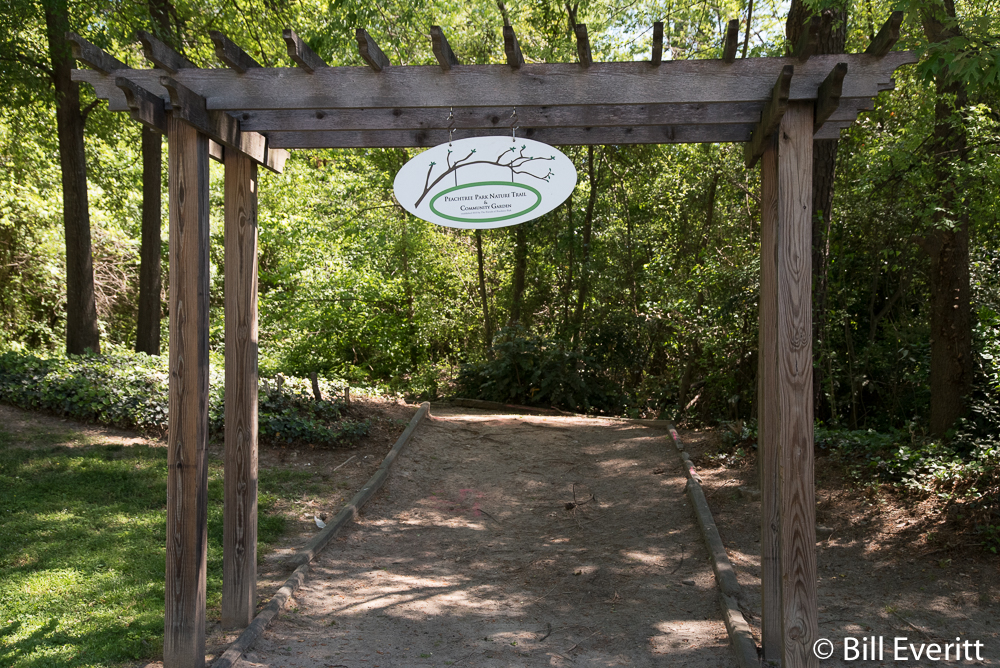
Trail Entrance

Peachtree Park Nature Trail – Darlington Commons Entrance

The Peachtree Park Nature Trail is a gem tucked in along the southeast boundary of the neighborhood.   When you walk this path, have you considered how much wildlife this little spot of land supports?

As a part of Ryan Tuemler’s Eagle Scout merit badge, he built four bluebird-size houses and installed them along the trail.  Here’s the cool part: three of Ryan’s four houses have birds nesting in them right now!  The one closest to the community garden appears to still be waiting on occupants.  Thanks Ryan!  Hope things are well at West Point and wish you were here to see what you’ve done.

Birdhouse #2 has Eastern Bluebirds.  This video shows they are hard at work feeding their chicks.

Take a stroll down the Nature Trail and tell us which bird you think is in house #1 and house #3.  Please read our notes on etiquette and take care not to disturb the hard-working parents.

While we were checking out the birdhouses yesterday, we noticed a pair of Red-bellied Woodpeckers who have built their own nest in the top of a snag near house #3.  So awesome to see in our neighborhood!

Thanks to all the volunteers who helped establish and are maintaining this trail!

Notes on Etiquette

Juts a few things to remember when watching nesters:

  • Keep a safe distance from the birdhouse: 20 – 30 feet is good – you can see a lot from this respectful distance.
  • Be patient. Bird parents are especially skittish when they’ve got babies. But if you’re quiet and still, they will think you’re safe and continue feeding.
  • Don’t go up to the birdhouse and certainly don’t touch it.
  • Don’t check the house early in the morning.  Also, avoid the nest at dusk and at night.
  • If you think you’ve disturbed the birds, then back up a little and give them some more room.

Nesting season is off to a great start!  Let us know who you have nesting in your yard.
Nandina Warning

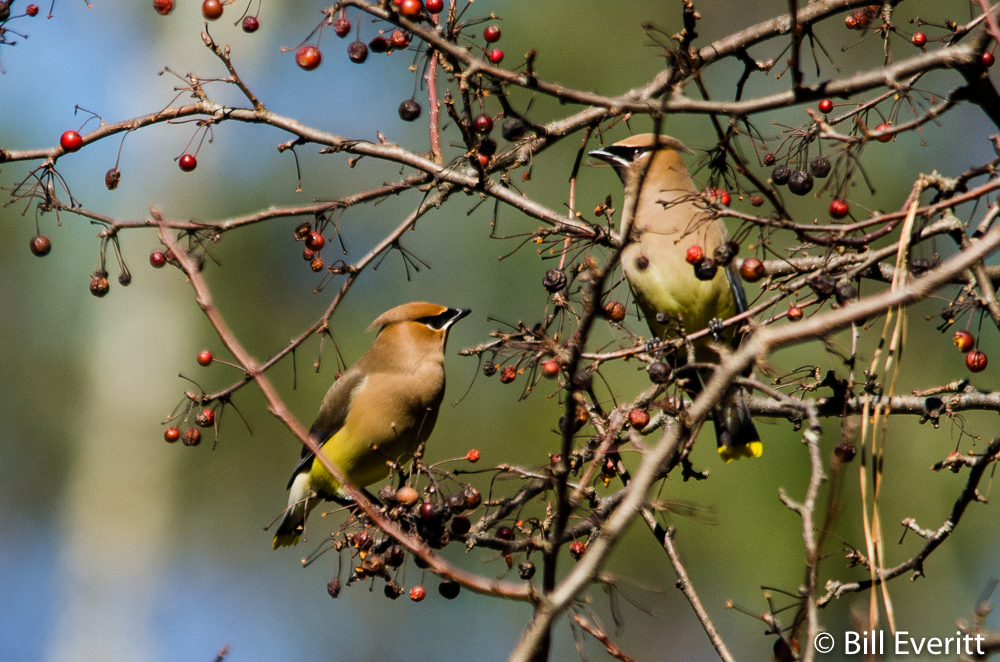
Cedar Waxwings eating Crabapples in January

Cedar Waxwings in January eating Crabapples, a safe food

You know how important food sources are to birds, especially in the winter and early spring.  If you’re like us, you have Nandina in your yard and it produces wonderful red berries that last through the cold months.  You’re feeling good about that because you have a plant that provides food in the winter.  But watch out, these berries are poisonous!

GABO – Georgia Birders Online is a wonderful resource for up to date information on birds in Georgia.  This past Saturday we saw the following post:

My family and I came across a gruesome site of a flock of dead cedar waxwings in front of Decatur High school this evening. I wasn’t sure of the total but it seemed like over a dozen birds dead within a small area of a few yards. No power lines or glass windows within the area.

someone responded:

…no way of knowing what they died from. I’ve heard the case of the Nandina poisoning though I never thought it sounded like solid proof.

Nandina Berries - photo: James H. Miller USDA, Forest Service

Nandina Berries – photo: James H. Miller
USDA, Forest Service

We had heard rumors about Nandina poisoning too but didn’t realize that they were true.

Steve Holzman, president of the Georgia Ornithological Society (GOS), is following up with the folks at UGA to ask if they will look at one of the birds and render an opinion on the cause of death since there are other possibilities, such as poisoning via insecticides. When the findings are available, we’ll follow up on this site.

In the meantime, we did a little homework and found out that Nandinas (often called Sacred or Heavenly Bamboo) are indeed very poisonous, especially when ingested in large quantities, which Cedar Waxwings certainly do as they are passing through and refueling for their journey. The berries contain cyanide and other alkaloids that produce highly toxic hydrogen cyanide which is extremely poisonous.

We’ve provided links to some information below on Nandina toxicity to birds as well as other animals including pets.  In the meantime, please consider the following:

  • Remove any Nandinas from your yard and replace them with native plants or others that provide safe food sources.  (We’re working on our Native Plants information and should have it completed soon.)
  • If you can’t remove the plants right away, please remove ALL of the berries before they turn red.
  • Tell others about this. It’s counter-intuitive because the berries look like they would be perfect bird food.
  • Encourage your local suppliers and landscapers not to carry these plants.

[1]  UGA, College of Veterinary Medicine: Toxicity Due to Nandina domestica in Cedar Waxwings
[2]  Wikipedia: Nandina – Toxicity
[3]  Audubon Arkansas: Nandina berries are toxic to birds and other animals